Learn how modular synthesizers work, from the physics up.
Most synthesizers hide a modular behind their panel. Learn to patch one yourself, for free, starting with the physics.
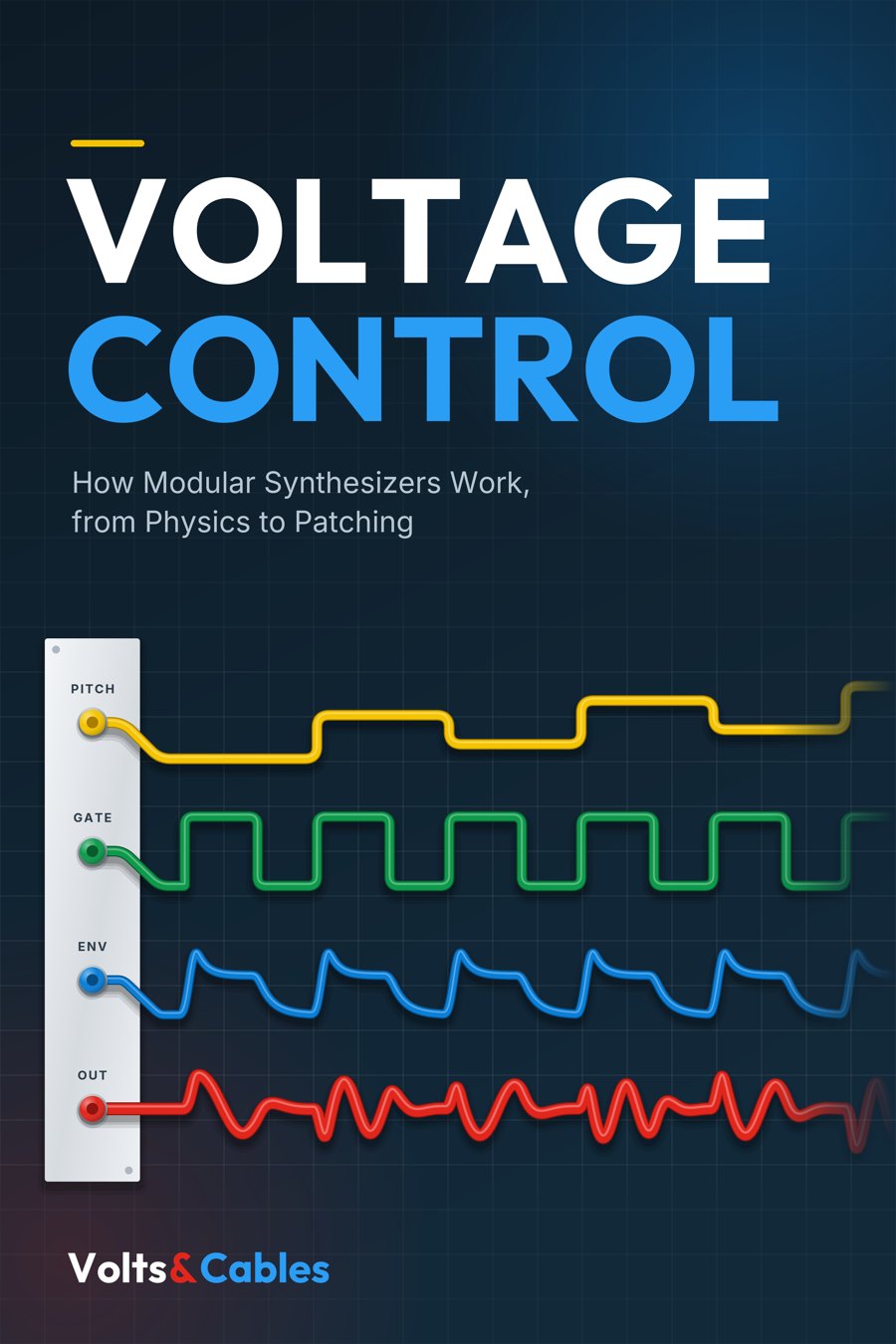
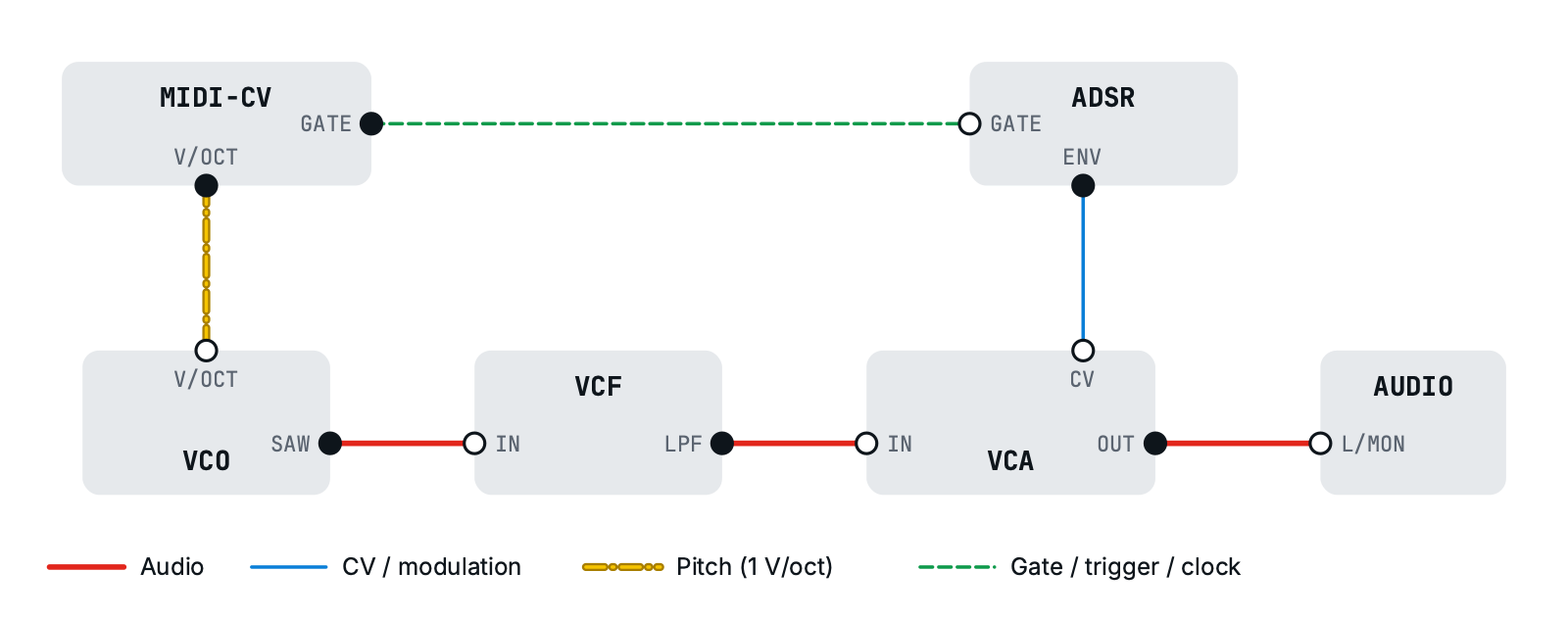
In the picture, a first voice: the keyboard's pitch in yellow, its gate in green, audio in red, and the envelope steering the filter in blue. The cables keep these colors all through the book.
One book, from what a volt is to your own rack
Most synthesizers, hardware or plugin, are built from the same few blocks, wired together in advance. A modular leaves the wiring to you, with cables that carry voltages. The book teaches you to patch it and to hear what each cable does. Even if you never buy one, you will read your own synths' panels better.
- 77 patches that run free in VCV Rack
- 22 recordings to listen to as you read
- 10 broken patches to find the fault in
- 6 recipes that end in a piece you play live
No background in electronics needed, and you don't need to read music.
See the contentsDrawn to make the physics visible
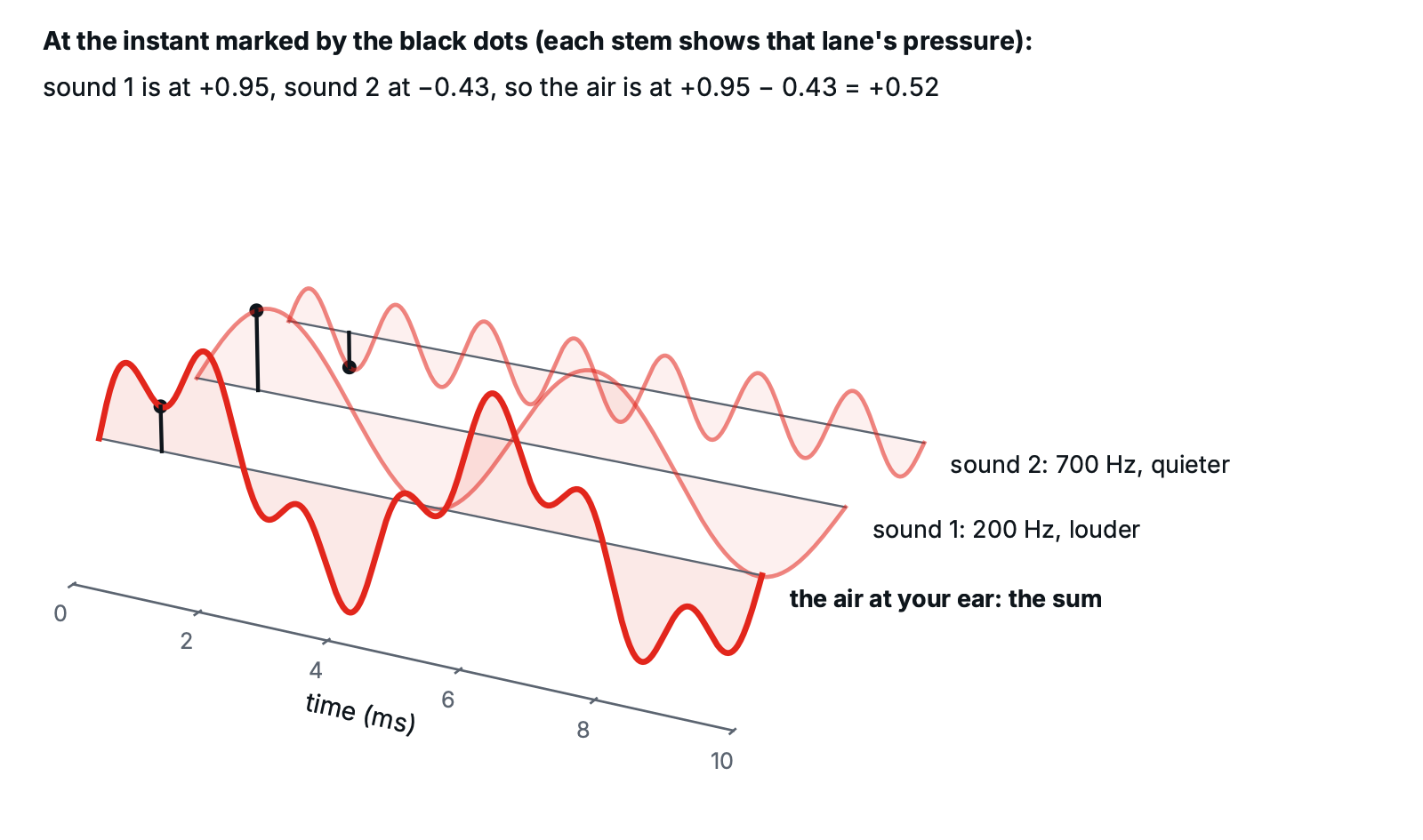
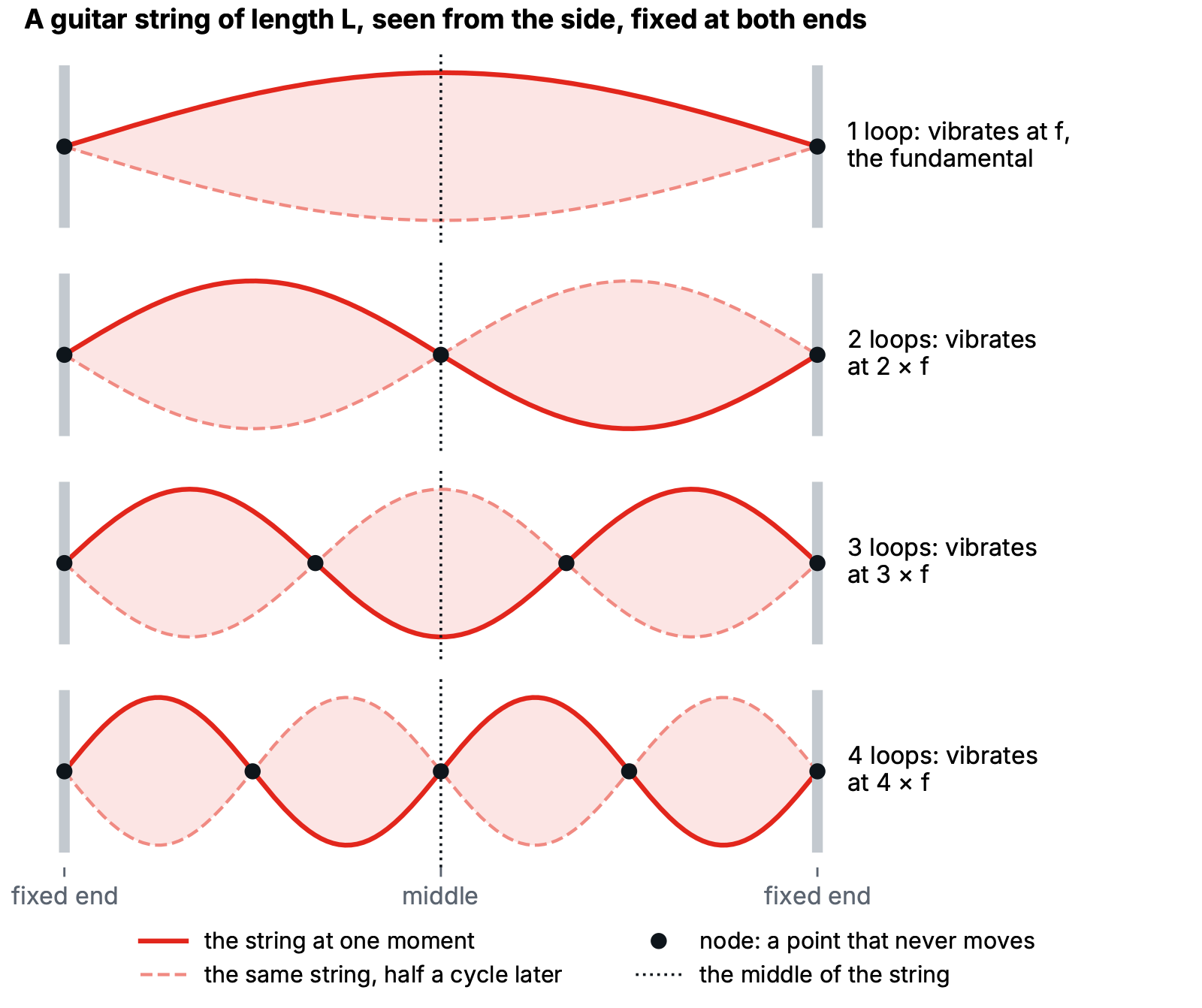
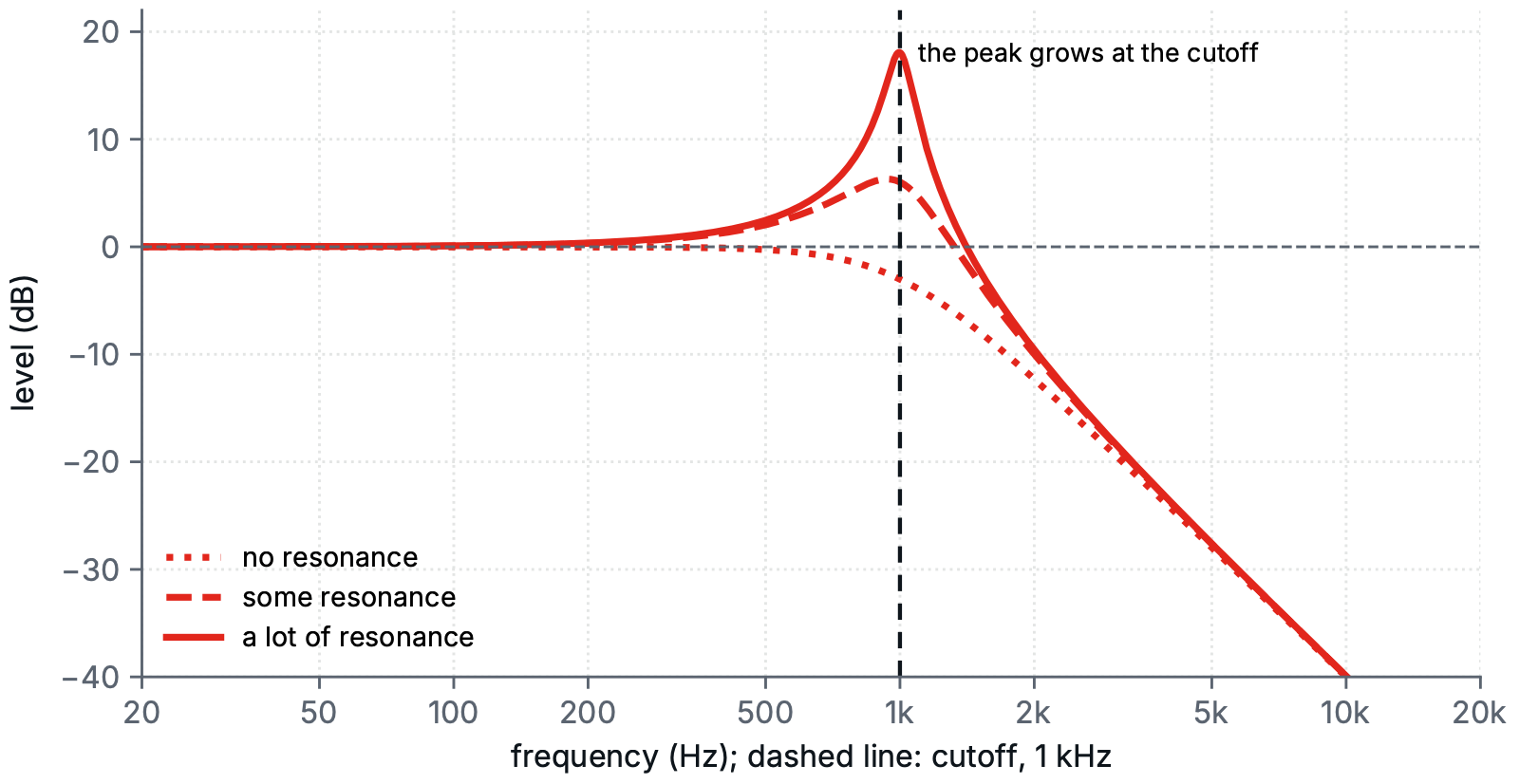
Every figure of the book is drawn for it, in the colors of the cables you will patch. A few of them:
Six parts, in the order you need them
Physics first, then the one idea that makes a modular work, then the modules themselves, and finally how to play and build a real system.
-
Part I
The physics you need
Electricity, sound, waves and spectrum: the physics you need before the first cable.
-
Part II
The modular idea: your first patches
Control voltage, the idea that makes a modular work, and your first patches.
-
Part III
The core vocabulary
One chapter for each family of modules, each with patches to try.
-
Part IV
Playing
Recipes, mixing, recording and playing live.
-
Part V
Building a real system
From a free software rack to a case of your own: power, levels, tuning.
-
Part VI
Modules up close
Real modules read panel by panel, with the manual beside you.
Hear what the cables do
Many chapters come with a recording. In this one, an LFO turns a filter's cutoff faster and faster: the slow wow becomes a flutter, then a rough new tone. Nothing changed but the speed.
When control becomes sound
The book is not out yet
Leave your email to get a free 16-page sample as soon as it is ready, and to hear first when the book is out. Meanwhile, the short video lessons are on Instagram and YouTube.